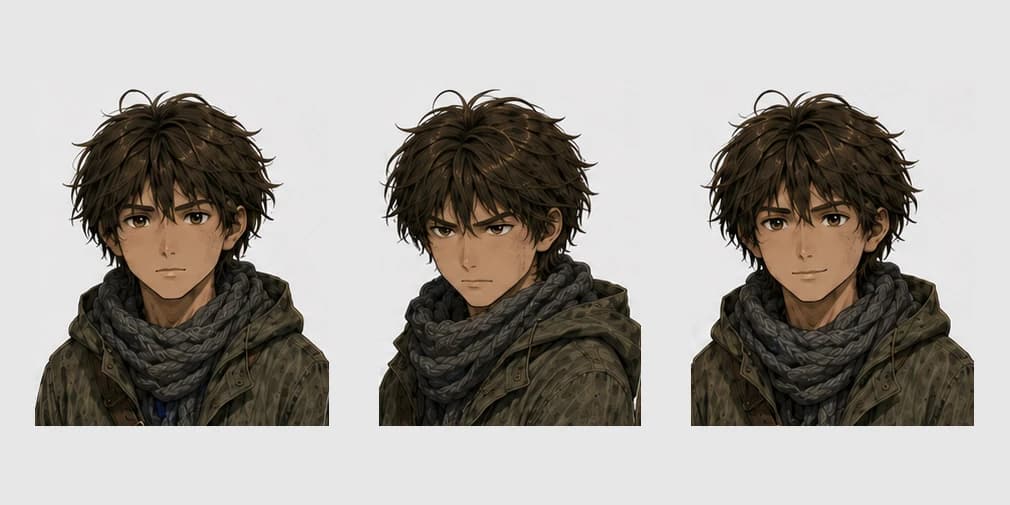
Personality
Source chapters: Chapter 3Human expressions and indirect speech puzzle Bram, while he finds beasts easier to understand. He thinks their fear and contentment show plainly, and sees their affection as something that does not turn toward a more attractive offer. Bram feels certain of his position when he is outside among the wilds. That certainty matters enough to him to justify his absence, even though he knows his aunt wants him to return sooner. He takes pride in the trust the grazing beasts give him after becoming familiar with his presence. Watching their quiet morning feeding, he cannot imagine anywhere else he would prefer to spend that moment.
Life and world
Source chapters: Chapter 3When Mott first appears by his evening fire, Bram lets him choose whether to approach. He neither pursues him nor tries to lure him closer, instead remaining patient while the beast watches from beyond touching distance. Bram understands that affection from a wild creature cannot be forced. Mott takes four evenings before allowing contact and a season before staying, and Bram accepts this gradual approach without demanding that it happen faster. Over two summers, Bram becomes familiar to the unowned grazers below the ridge. They tolerate him sitting among them during feeding, although his relationship with them differs from the personal attachment he has with Mott.
Bram follows a distant reference point when crossing uneven country, using the approach practised by the older trackers. He maintains his chosen direction even when a gentler slope or an existing path offers an easier alternative.
In Chapters 1-4
Source chapters: Chapter 3| Chapter 3 | Bram rests on damp grass near the ridge with his hands supporting his head. Instead of rising after telling Mott he will, he rubs behind his companion's ear and shares a period of uncomplicated happiness with him. When Mott suddenly stiffens, Bram sits upright and sees the grazers stop together, each facing the same distant direction. He recognises that their complete immobility differs from the brief alarm and disorder he ordinarily sees when they startle. Bram notices that birds, insects, and the wind also become silent. He experiences the stillness as something filled with attention, unlike the quiet of snow or an approaching storm, and finds himself facing the direction the beasts watch. He holds his breath while searching the distant hills for anything visible that might explain their attention. After the usual sounds return, his heartbeat is forceful, but he feels curiosity rather than fear and wants to understand. After checking that the grazers resume normal feeding, Bram walks toward the place they face during the interruption. He reaches a small depression but cannot identify an exact destination or discover any visible trace of what draws their attention. The air at the depression feels unusually thin to Bram, and the light appears unnaturally clear and motionless. These sensations fade over several breaths, leaving him unsure afterward whether he detects anything strange there at all. Bram stops descending when Mott refuses to follow, trusting his companion's response. On returning uphill, he adds this occurrence to his remembered tally and questions what the beasts repeatedly look toward when he can see nothing himself. |
|---|
Relationships
Source chapters: Chapter 3During cold nights outside, Bram feels Mott's rolling chest sound against his own body. When the morning disturbance ends, he keeps a hand on Mott's shoulder while that familiar sound regains its steadiness.
Quotes
Source chapters: Chapter 3“I'm getting up.”
Gallery