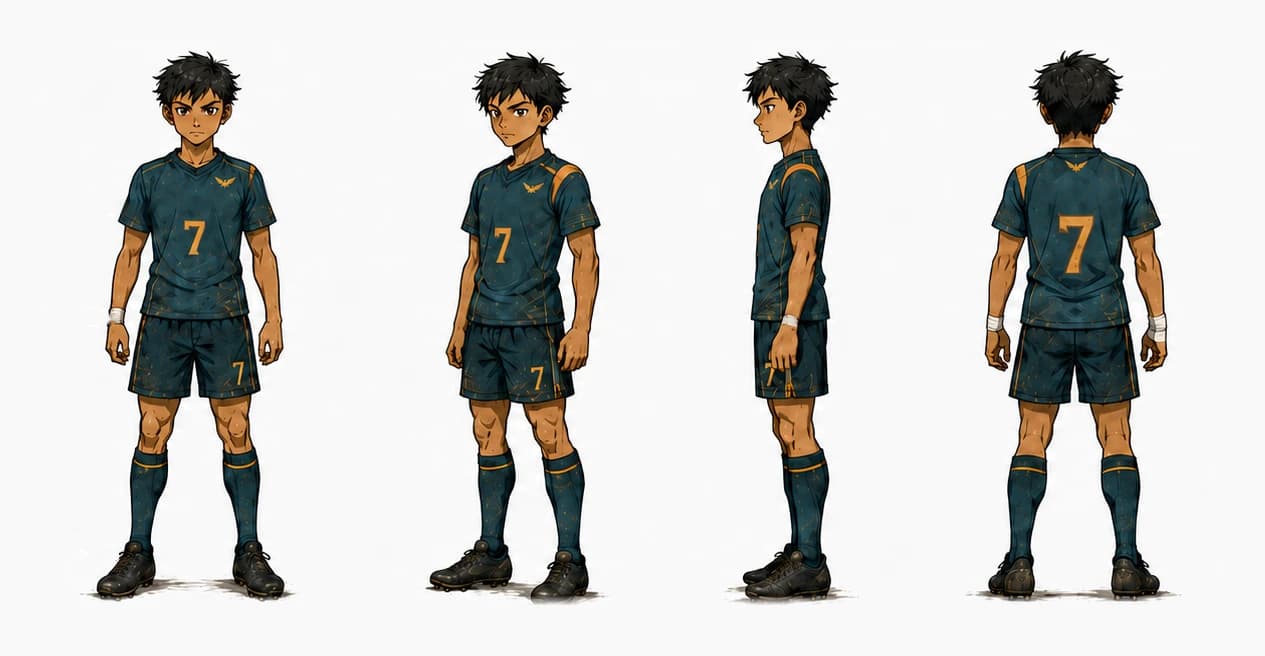
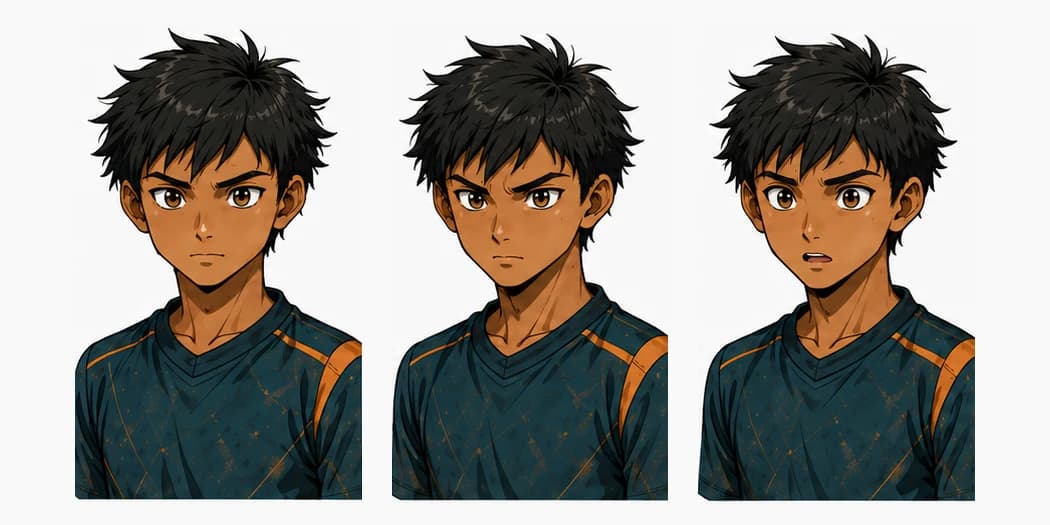
Personality
Source chapters: Chapter 2Being described as promising troubles Goro because he understands the praise as an expectation still waiting to be fulfilled. He fears that this unfinished promise may become the only description that ever fits him. Goro longs to turn a losing match into a victory himself. When his neighbours respond to defeat not with anger but with a forgiving sigh, he hates that sound more than any other and feels defined by getting close without completing the decisive play.
Life and world
Source chapters: Chapter 2His neighbourhood watches games from a low wall beside a rough playing area between the canal and the dye works. On the day shown, familiar faces crowd that wall while Goro's side falls behind opponents wearing red.
In Chapters 1-4
Source chapters: Chapter 2| Chapter 2 | The Sparrows trail Cart Road by one goal late in the afternoon. Goro runs while his lungs burn, with his teammates calling around him and the remaining time shrinking beneath the evening light. Earlier chances include a header that skims the top of the ring and drops wide, and a low attempt stopped against the opposing keeper's chest. Goro feels increasingly burdened as these opportunities disappear, despite his ability to anticipate the movement of play. A loose clearance near the opponents' ring gives Goro another opportunity, and he reaches the opening before it fully develops. He collects the ball while running, passes a defender, and sees where the keeper's movement leaves space for a shot. His attempt touches the keeper's fingers, strikes the ring, and rebounds before the whistle ends play. Afterwards, lying awake, Goro repeatedly considers whether his timing, the ball's position, or the keeper's reach accounts for the miss. Someone offers a consoling comment and touches Goro's shoulder as spectators disperse. He retrieves the ball from vegetation beside the canal and holds it, not trusting himself to speak, before remaining at the wall after his neighbours leave for supper. As darkness approaches, Goro thinks about becoming a player whose successes make spectators cheer instead of sigh. He wants the whole Quarter to speak his name and wants to complete the important play reliably instead of narrowly failing. Goro objects that every side sometimes loses, although Ferro's account quickens his heartbeat. He pays little attention to the end of Ferro's description and concentrates on the possibility of players moving with the coordination of a single body. Thinking back to the missed chances, Goro believes that a side acting as one could avoid those errors. His desire becomes directed toward the unfamiliar place Ferro describes, and he says he wants to see the players and acquire their skill. After Tamsin leaves, Goro remains alone with the ball beneath a buzzing lamp near the dye works gate. He repeats his unsuccessful move, retrieving each shot and starting again while his breathing grows hard and his legs hurt. Without a keeper or spectators, Goro sends the ball successfully through the ring repeatedly. He recognises the difference between his accuracy in solitary practice and the small failures that occur amid other players when the outcome carries weight. Goro stops with his foot resting on the ball and considers how much he would give for that level of play. He resolves to find the unbeaten side, then carries the ball back through neighbourhoods now sleeping, with his desire still fixed on it. |
|---|
Relationships
Source chapters: Chapter 2Tamsin sits beside Goro after the loss, offering company and disputing that Goro's feet caused the miss. Goro attributes his friend's unusual dream to nerves, trades shoves with him, and returns to their customary argument about the game.
Ferro takes a seat beside Goro and introduces the account of an unbeaten team far across the Quarter. When Goro declares that he wants to see them and play that way, Ferro studies him without replying, then leaves with a limp.
Quotes
Source chapters: Chapter 2“It's always something”
“I want to play like that.”
Gallery